Scaling AI From Experiment to Infrastructure Inside a Product Org
The operator's playbook for moving AI from isolated pilots to operating infrastructure, scaling 33 production initiatives in a single year.
I’ve been there. You run a successful artificial intelligence pilot, everyone applauds the innovation, and then the momentum completely dissipates. The pilot remains a siloed experiment, while the core operating machinery of the business grinds on exactly as it did before. The real challenge is rewiring the organization to make the technology the default infrastructure.
When you shift from trying something new to fundamentally changing how the organization runs, the challenges stop being technical and become structural. Strategy without execution is daydreaming, but execution without a clear strategy is just running in circles. The product leader’s job is to find the narrow path between them, and to hold the team on that path when pressure to revert to the old ways is highest. Most businesses optimize for the metric they can measure, not the outcome they actually want. The strategic question is always: what are we not measuring that matters most? And then: what do we do about it?
Key takeaways
- Workflow redesign beats task substitution: Swapping a human task for an algorithmic output creates a learning tax. Real gains require re-architecting the entire process from the ground up.
- Adoption intensifies work: The technology removes the friction of starting tasks, which frequently leads to blurred boundaries and an increased cognitive load for the team.
- Human capital dictates technical value: Operational efficiency is driven by the synergy between human expertise and technical infrastructure, with human capital playing the dominant role when resources are imbalanced.
- Execution demands a product mindset: Treating internal operations as products ensures that new systems solve real bottlenecks rather than just adding novel features to a broken process.
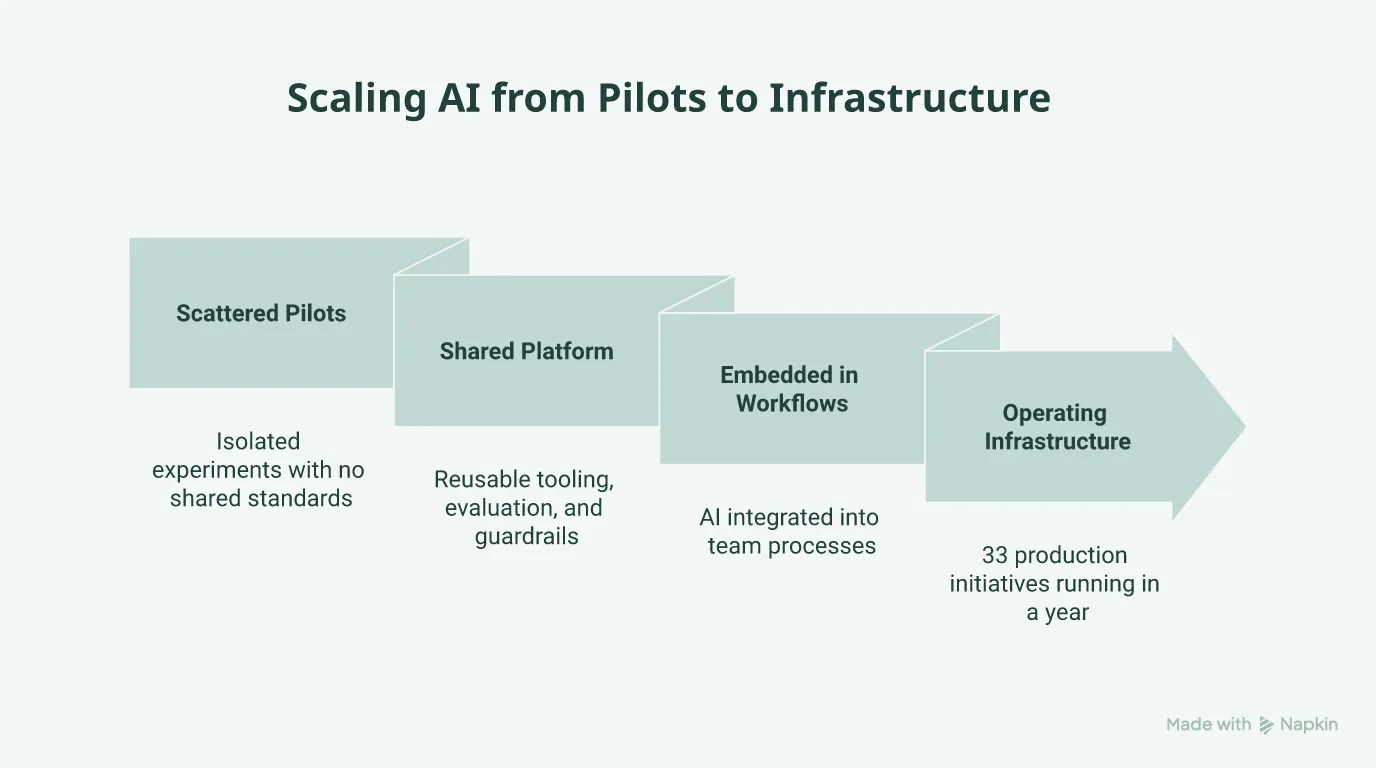
Scaling from Scattered Pilots to Operating Infrastructure
How do you build the momentum required to turn an isolated experiment into a standard operating procedure? You apply a rigorous product management mindset to your internal workflows.
I measured this transition during a recent operational overhaul of our internal systems. We successfully scaled from zero to 33 production automation initiatives in a single year. In our review of these deployments, my data showed that we reclaimed approximately 29,000 work-hours annually. This 0→33 transformation was not achieved by simply purchasing enterprise licenses and distributing them to the team. We spearheaded a deliberate effort to treat our internal operations as products that required deep discovery phases, user testing, and iterative refinement.
Approaching internal workflows as products forces you to identify the actual friction points and design systems that connect directly into the daily habits of your team. I championed an approach where we mapped every existing manual step before introducing any new software. We found that the biggest gains came from aligning the model’s inputs and outputs perfectly with the next step in the value chain. The goal is to make the right decision the path of least resistance.
Treating Content as Code With an Engineering Mindset explores this idea further, showing how structural thinking is required to manage complex information at scale.
The Hidden Learning Tax of Simple Substitution
Why do some organizations fail to see returns on their software investments? The data points to a failure in how the technology is integrated into existing habits.
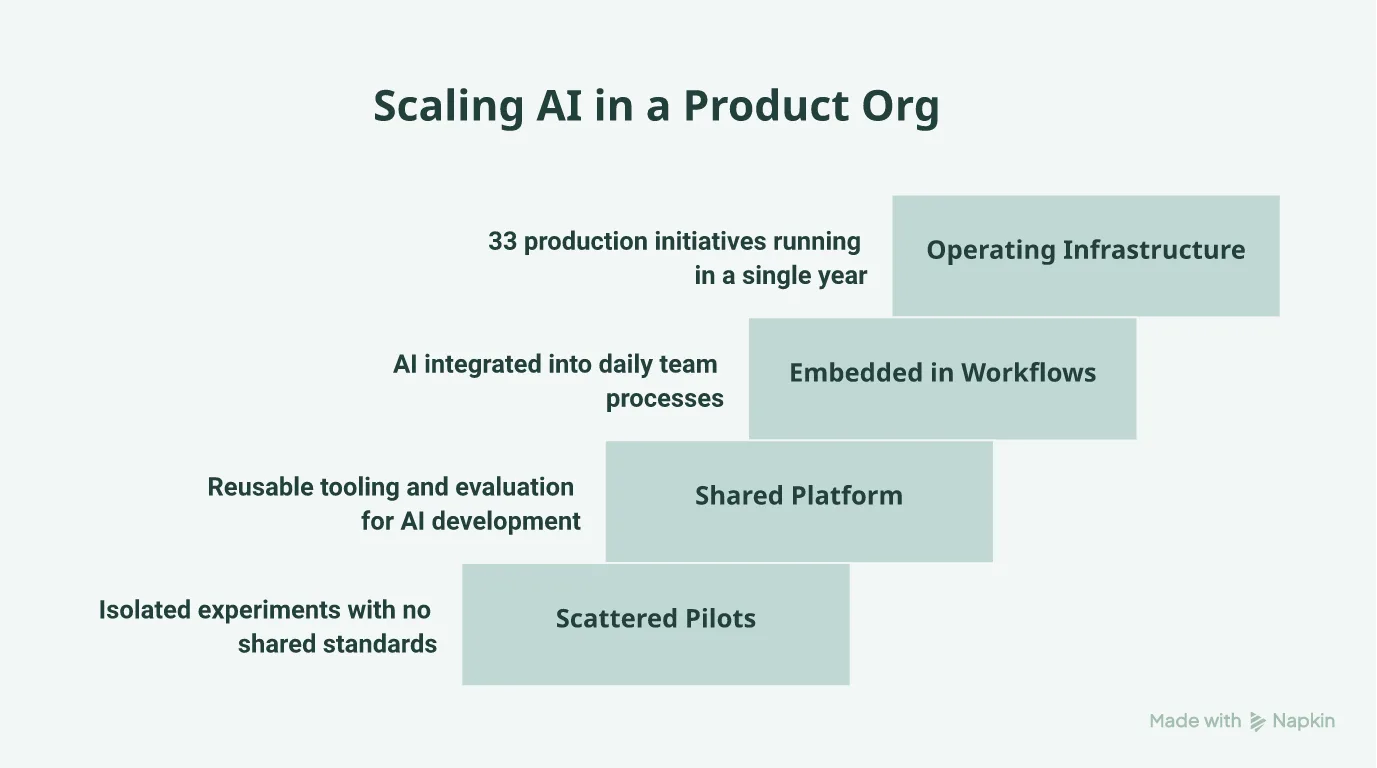
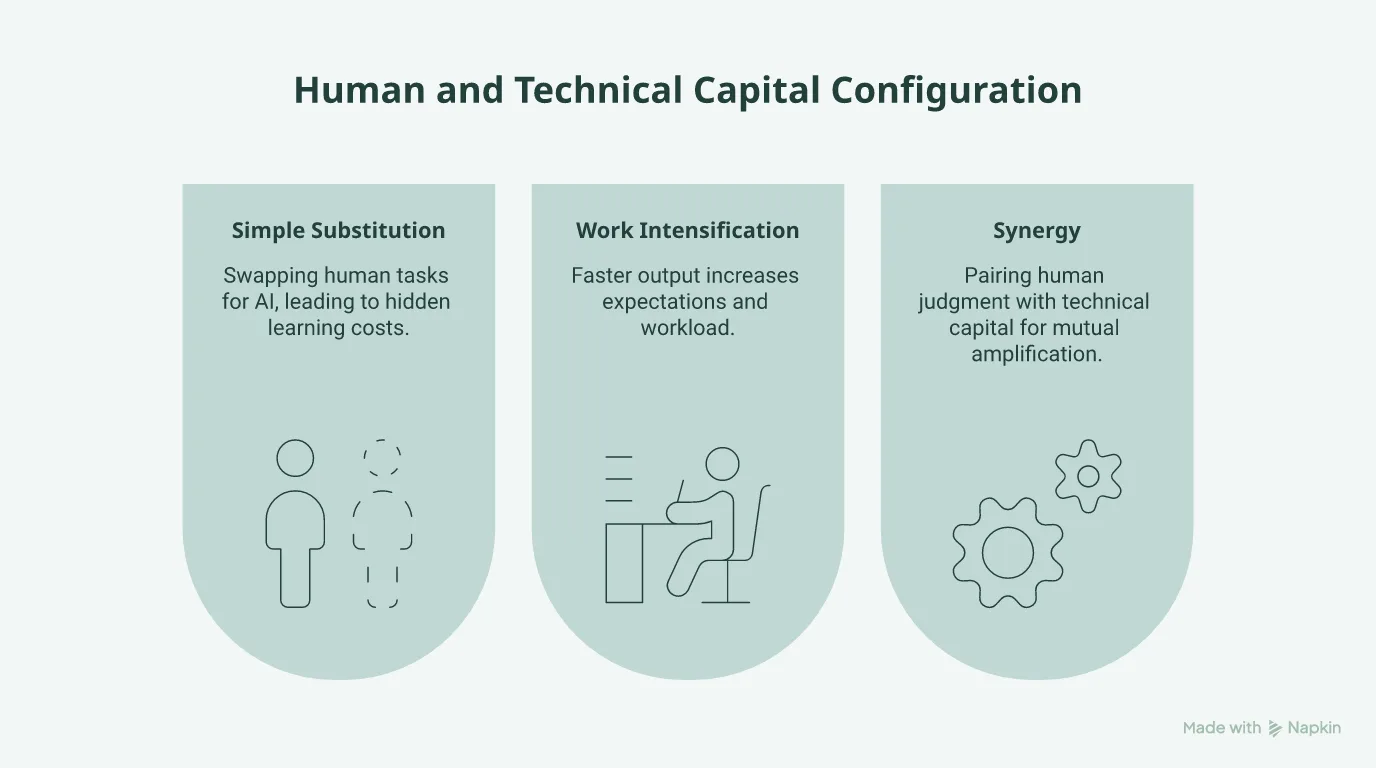
A 2026 Stanford study examining adoption patterns at Google revealed that while users wanted to find value in new tools, many became stuck in simple substitution. They attempted to swap existing manual tasks for generated outputs, only to discover that the learning tax of operating the new tool was often greater than the initial payoff. The researchers found that successful, deep adopters approached the technology differently. They didn’t merely focus on prompt engineering or basic inputs. Instead, they took inspiration from product management, completely redesigning entire workflows to establish a strong fit between the technology and the operational blockers.
If you measure success by the number of active licenses, you will encourage simple substitution. If you measure success by the efficiency of the redesigned workflow, you will drive deep adoption. We must measure the actual reduction in friction, not just the presence of a new tool. When we executed our internal rollout, we actively discouraged teams from automating bad processes. If a process was broken, adding a conversational interface to it only masked the underlying dysfunction.
The Paradox of Work Intensification
Does this technology actually make our jobs easier, or does it simply change the nature of the difficulty? Evidence suggests that for deep adopters, the technology often increases the demands placed on them.
A longitudinal UC Berkeley study published in 2026 found that employees who adopted these systems actually saw their work intensify. Because the technology made “doing more” feel accessible and intrinsically rewarding, users experienced significant task expansion. They stepped into responsibilities previously handled by others, absorbing work that might have required additional headcount.
Furthermore, the conversational interface of these tools reduced the friction of facing a blank page, causing work and nonwork boundaries to blur. Employees slipped quick prompts into moments typically reserved for breaks, creating a workday with fewer pauses and more continuous involvement. Finally, the ability to manage multiple active threads while waiting for generated outputs led to increased multitasking, which heightened the overall cognitive load.
As a product leader, you cannot ignore this intensification. If you deploy systems that remove the natural friction of work, you must actively manage the resulting cognitive demands on your team. You have to establish new rhythms and boundaries; otherwise, the very tools meant to improve efficiency will inevitably lead to burnout. I’ve seen firsthand how a highly productive team can quickly become overwhelmed when the natural cadence of their work is disrupted by instant, always-on processing capabilities.
Configuring Human and Technical Capital for Synergy
How should organizations allocate resources to maximize the impact of these new systems? The answer lies in the interaction between human expertise and technical infrastructure.
A 2026 study published in Decision Support Systems examined the impact of configuring human and technical investments on operational efficiency. The researchers found that investment synergy significantly enhances firm operational efficiency by promoting innovation. This positive effect is even stronger for firms managing a diverse customer base, indicating that synergy is particularly valuable in highly heterogeneous, information-intensive environments.
Importantly, the study revealed that different configurations yield very different outcomes. Firms that adopted a “high human-low non-human” investment pattern performed better than those with the opposite configuration. This suggests that human capital plays a more dominant role in operational improvement than the technical capital itself. The deployment and value realization of these technologies depend heavily on the ability of human talent to absorb and interpret the systems into business processes.
We cannot simply buy our way into operational efficiency. We have to invest equally, if not more heavily, in the human expertise required to direct the infrastructure. When you prioritize the synergy between your people and your tools, you build an operating system capable of sustaining long-term execution. Designing Trust Into AI Products is a critical part of this equation, as human operators must have confidence in the systems they manage.
In the end, moving from an experimental pilot to a foundational operating infrastructure requires a fundamental shift in perspective. You are now redesigning how your organization produces value. The same shift shows up one layer down, where the specification becomes the artifact under version control rather than the code it generates.
References
- Pratt, A., & Valentine, M. (2026). To drive AI adoption, build your team’s product management skills. Harvard Business Review. https://hbr.org/2026/02/to-drive-ai-adoption-build-your-teams-product-management-skills
- Ranganathan, A., & Ye, X. M. (2026). AI doesn’t reduce work, It intensifies it. Harvard Business Review. https://hbr.org/2026/02/ai-doesnt-reduce-work-it-intensifies-it
- Xu, J., Zhang, B., & Lu, J. (2026). Configuring human and AI investments: Synergy and its impact on operational efficiency. Decision Support Systems. https://doi.org/10.1016/j.dss.2026.114702
Frequently asked questions
How do organizations move AI from pilot to production?
Organizations scale AI by applying a product management mindset to internal operations. This requires redesigning entire workflows rather than treating AI as a simple drop-in replacement for existing tasks.
Does adopting AI reduce employee workload?
Research shows that AI adoption frequently intensifies work. By removing the friction of starting tasks and enabling continuous multitasking, the technology often leads to blurred boundaries and increased cognitive load.
What is the hidden learning tax of AI adoption?
The learning tax occurs when users attempt to swap a manual task for an AI output without altering the surrounding process. The effort required to manage the new tool often outweighs the efficiency gains.
How should companies balance human and AI investments?
Firms must prioritize the synergy between technical infrastructure and human expertise. Data indicates that a configuration favoring high human capital over non-human capital yields superior operational efficiency, as human judgment is required to integrate the systems effectively.